How the Chaos is Made
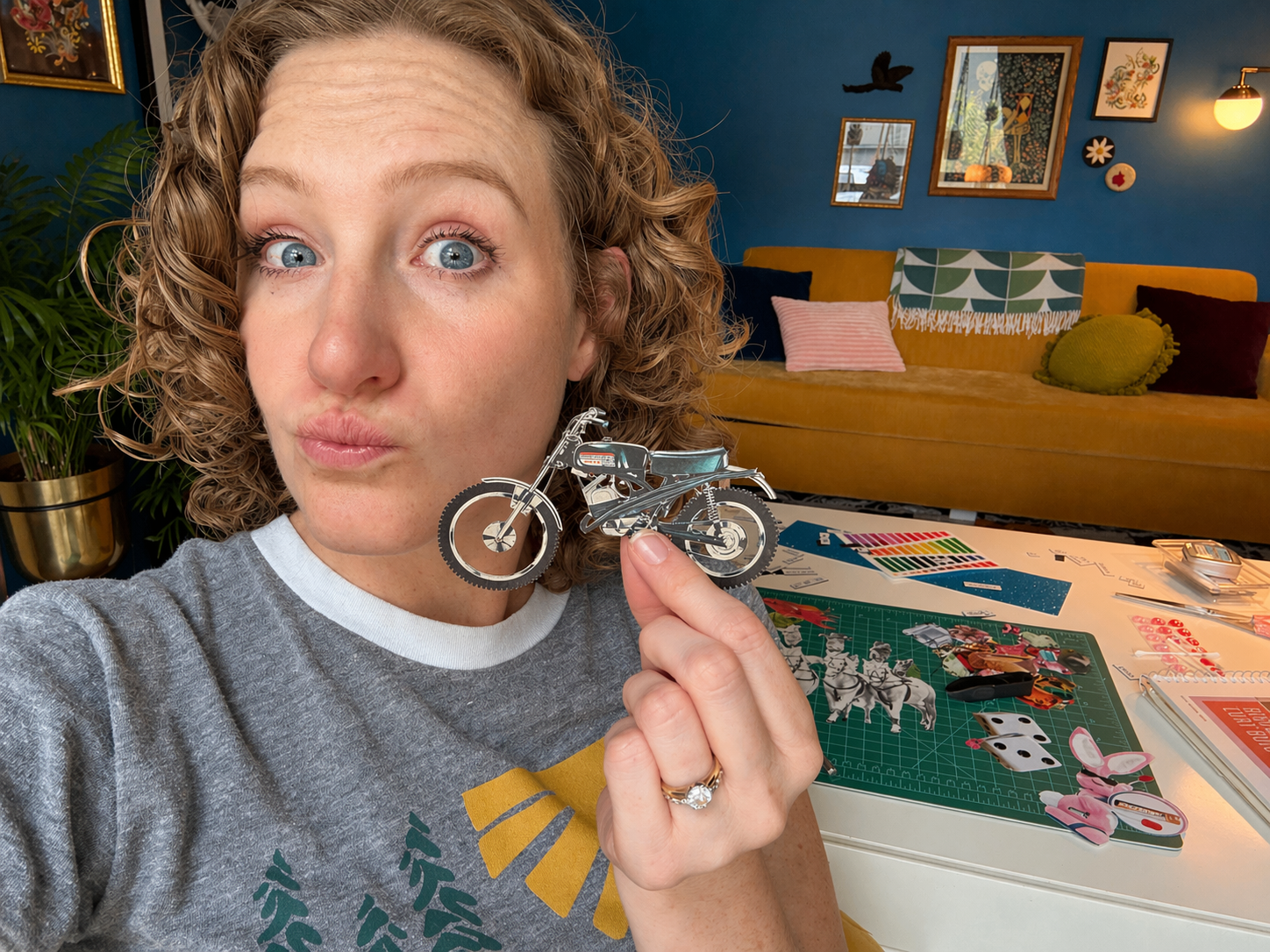
My artworks are assembled from found imagery and materials—namely vintage magazine cutouts, old books, paper ephemera, and a whole lot of glitter.
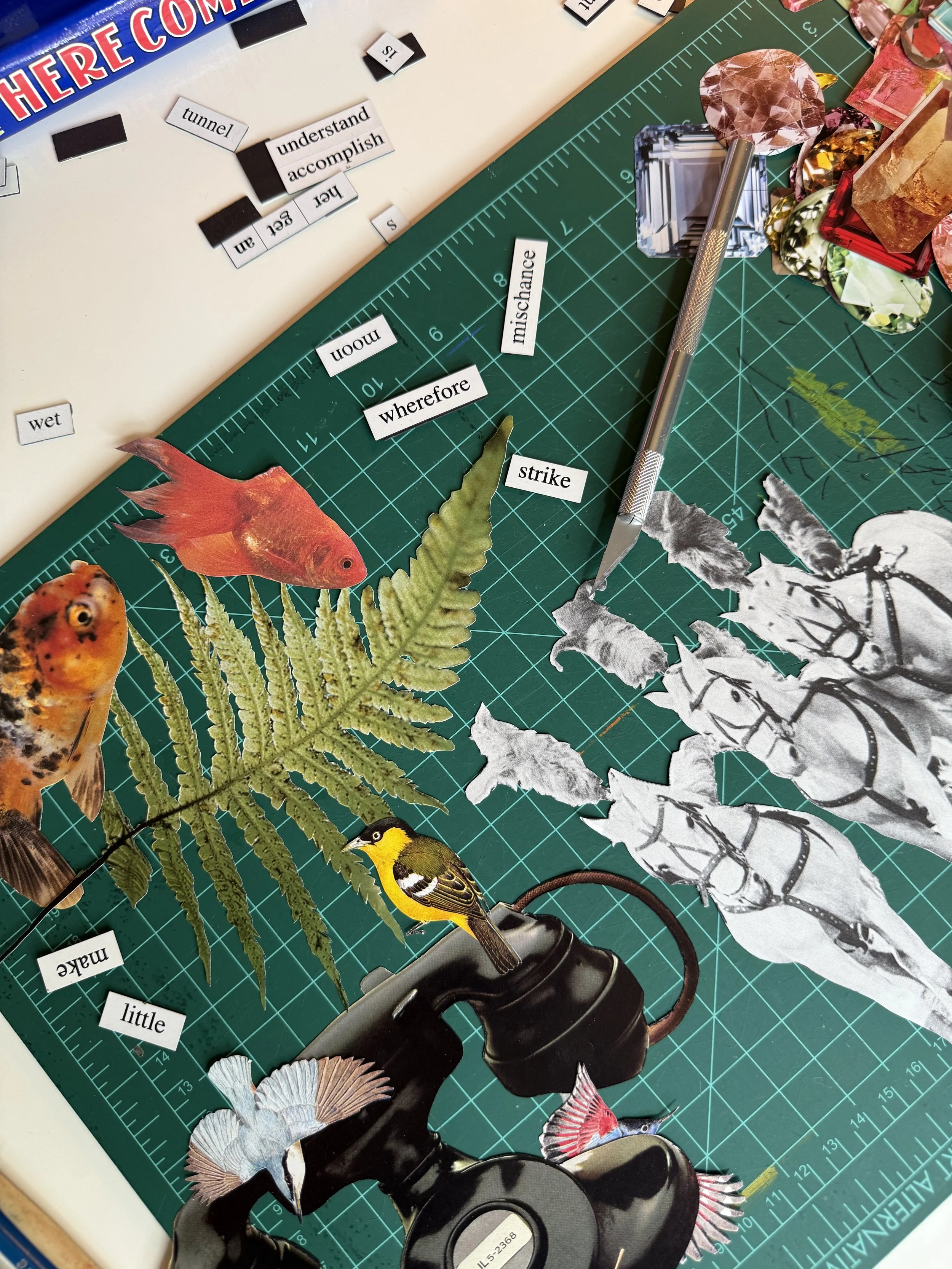
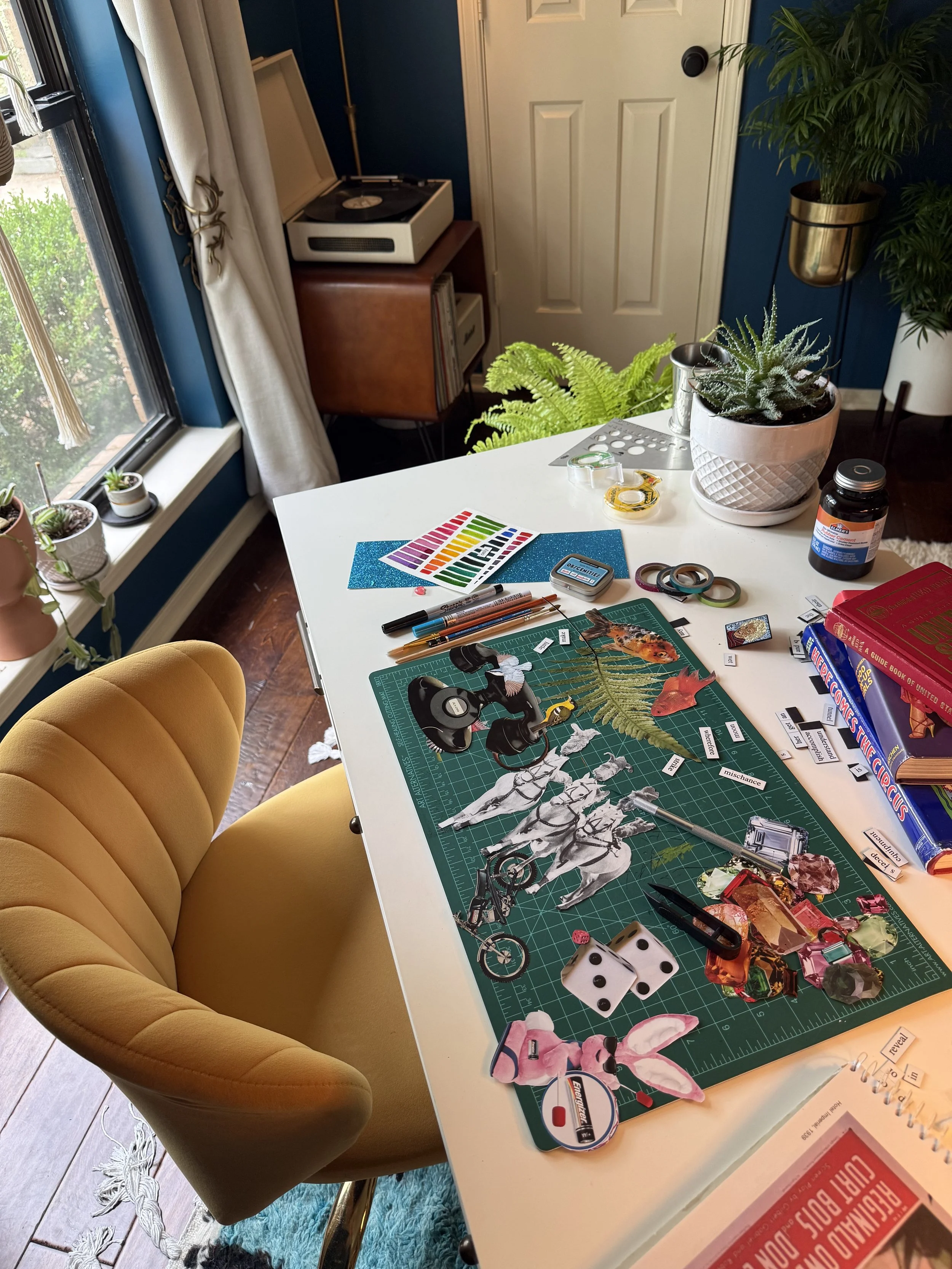
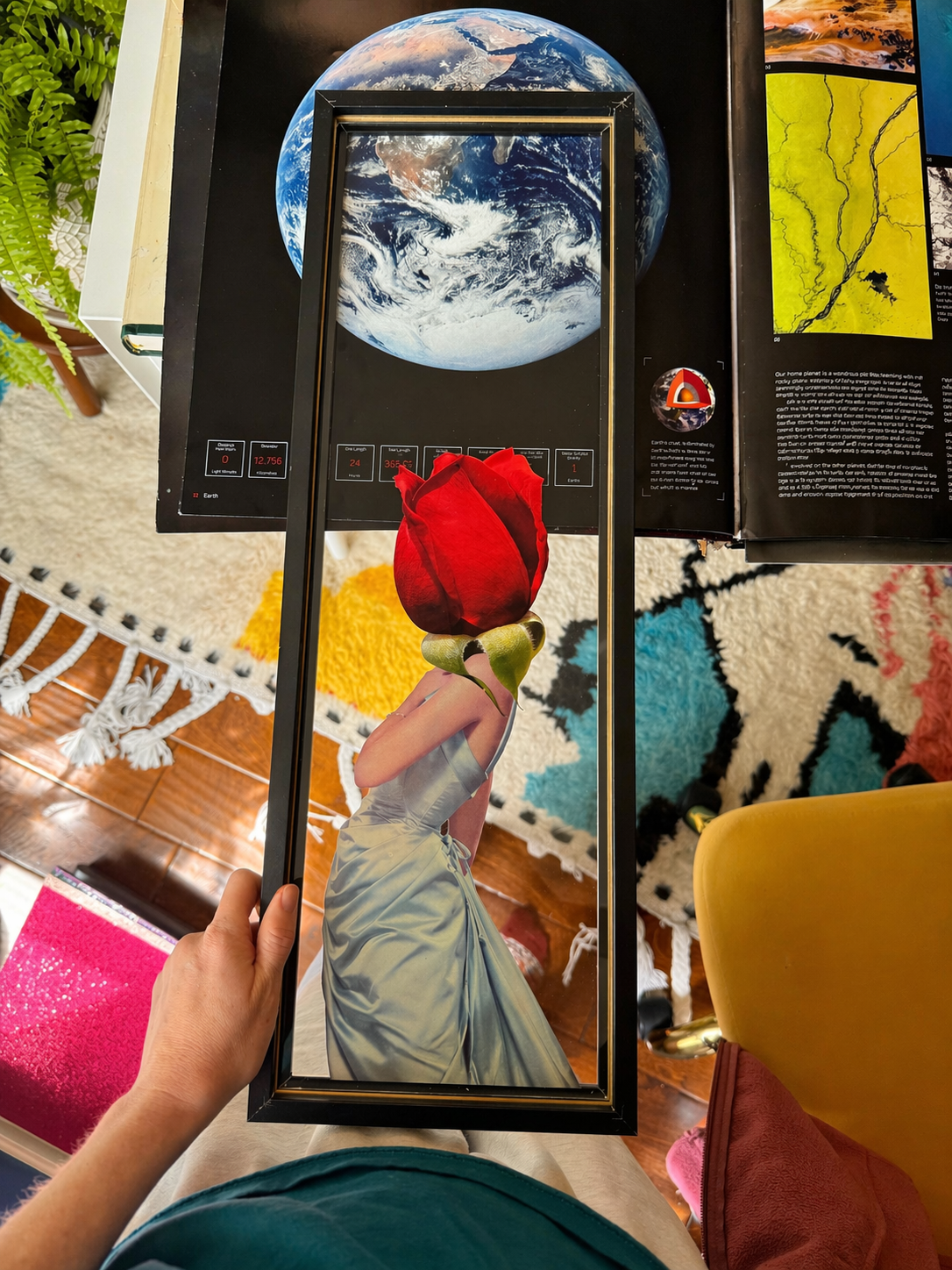
Most pieces begin with meticulously hand-cut images from old books and magazines: Life, Playboy, coffee table books about space or underwater exploration, reference manuals on gems, rose gardens, animals, homemaking, and other highly specific rabbit holes. I’m drawn to printed matter that already feels a little haunted — images from another era that were trying very hard to be beautiful, useful, sexy, scientific, or wholesome.
Then I start interfering.
I cut, rearrange, layer, and compose until the original context gives way to something stranger. The chocolate ganache goes galactic. A pinup girl bares her teeth. The house keys are missing again, absconded by an oversized caterpillar. Once the composition feels right, I add the glamour: paint, ribbon, glitter, and, when necessary, more glitter.
Text is a major part of my process. I’ve been a copywriter for 13 years, so I’m obsessed with how a few words can change the entire emotional temperature of an image. Many of my pieces include headlines built from fridge magnets. Sometimes the text acts like a caption. Sometimes it’s a punchline, a threat, a spell, a heckle, or an intrusive thought. I love the tension that happens when a peaceful image gets interrupted by the wrong words.
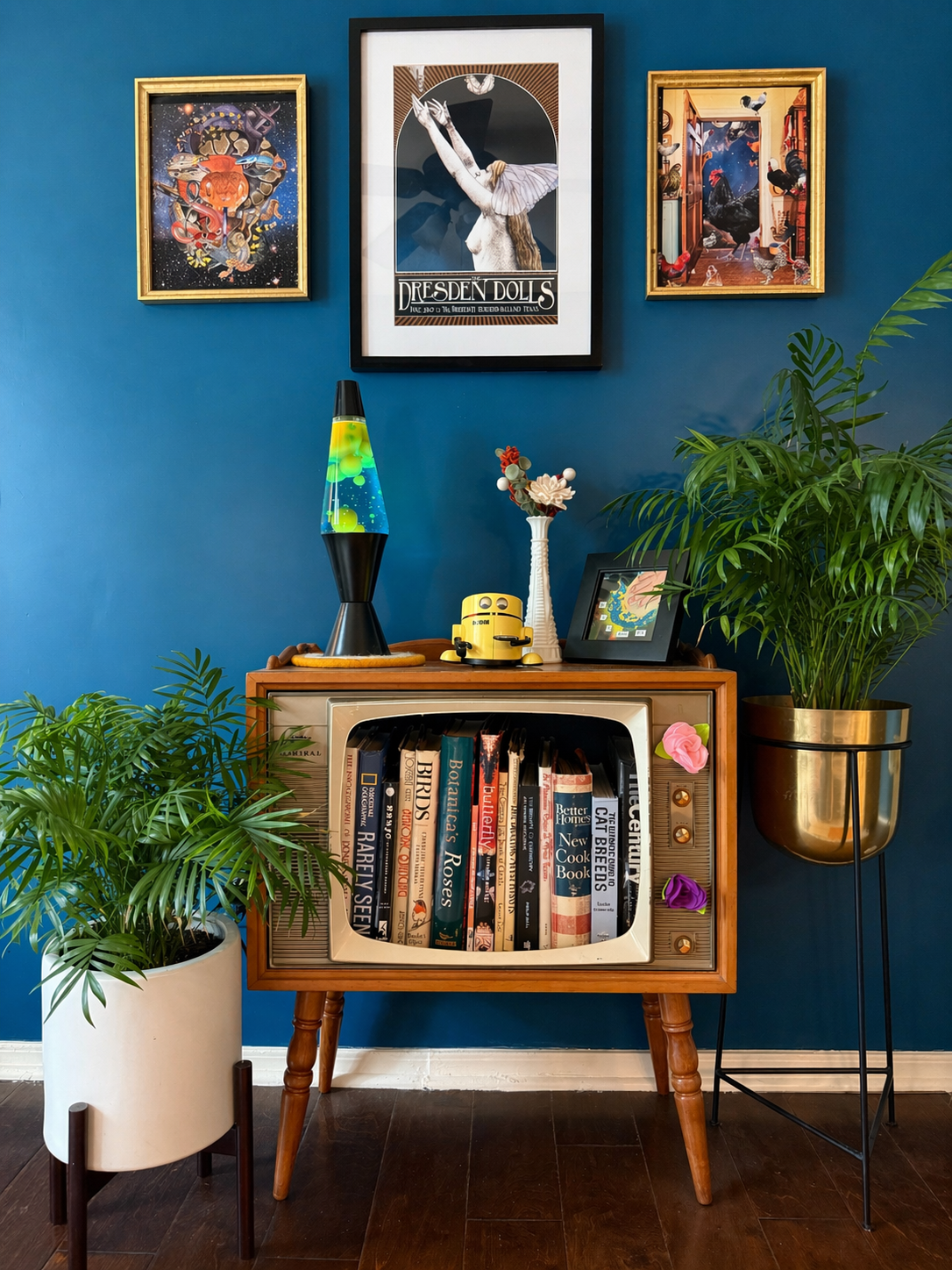
All of my artworks are sold pre-framed, and many are matted with materials that become part of the piece — magazine cutouts, glitter board, patterned paper, or other decorative interventions. Depending on the work, I’ll use a clean modern black frame or a repurposed vintage frame found at an estate sale or thrift shop. The frame isn’t an afterthought. It’s part of the world.
When you buy a piece, you’re not just buying an image. You’re buying the whole weird little universe it lives in.